
South Bohemia
Český Krumlov
A UNESCO gem wrapped in a bend of the Vltava — the fairytale Czechia you imagined.
"If Prague is the country's brilliant capital, Český Krumlov is its perfectly preserved secret — a river-wrapped medieval town that still feels, on a quiet morning, entirely yours."
01
Chapter One
Overview
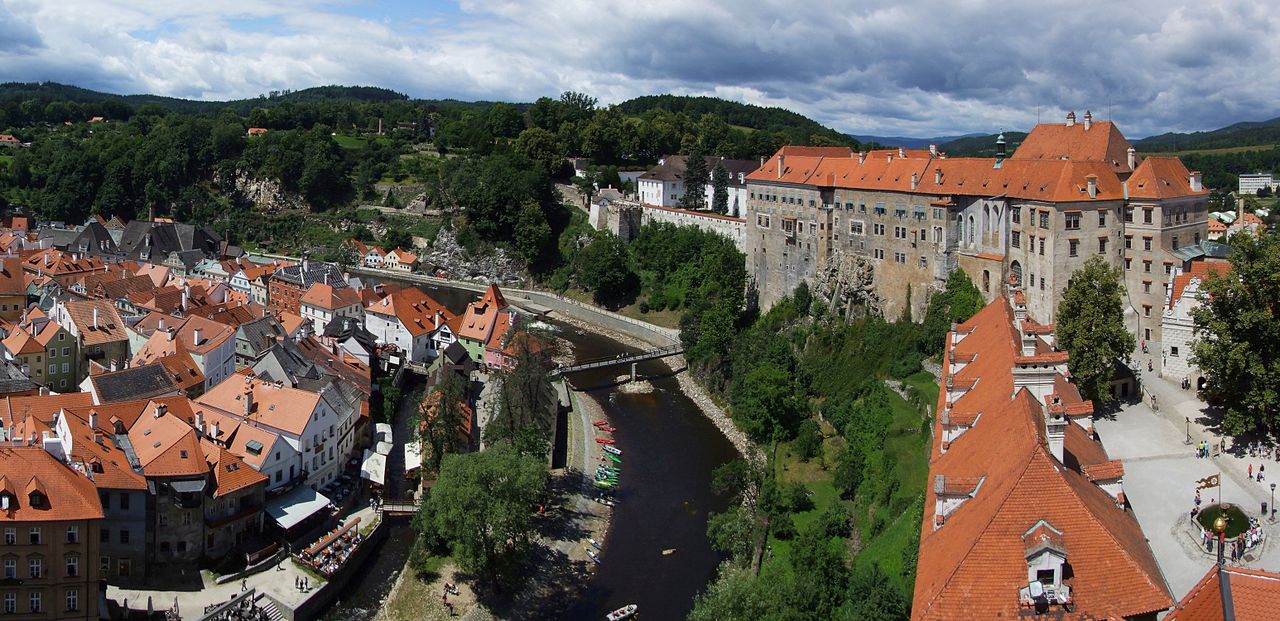
Český Krumlov sits in the deep south of Bohemia, about 170 km from Prague and just 40 km from the Austrian border. The town wraps itself around a tight double bend in the Vltava River, with a hilltop castle on one side and a compact medieval old town on the other. Together they form one of the most complete late-medieval / Renaissance townscapes in Europe, protected as a UNESCO World Heritage site since 1992.
For all its beauty, Krumlov is small — you can cross the historic centre in fifteen minutes on foot. That intimacy is the point. Come for a night, walk it slowly at both ends of the day, and you'll leave with a stronger impression of Bohemia than most weeklong tour itineraries deliver.
02
Chapter Two
Why Visit Český Krumlov
There are prettier villages in Czechia, and there are more important cities. Krumlov's magic is the combination: a town small enough to walk in a morning, with the density of monuments — a castle, five courtyards, a Baroque theatre, a Baroque garden, dozens of Gothic and Renaissance townhouses — that you'd normally expect from a regional capital.
The other reason to come is what happens after 6 p.m. Most day-trip coaches leave by late afternoon. The town empties. The lantern lights turn on along the river. Restaurants that felt overrun at lunch turn into candlelit rooms with a fireplace and a Pilsner tap. If you can only give Krumlov one thing, give it an overnight.
Chapter Three
Top Attractions
Six sights carry Český Krumlov's reputation. Take them slowly — none of them takes long, but each rewards a second look. If you only have half a day, prioritise the castle courtyards, the Cloak Bridge and the gardens; save the interior tour for a return visit.

Český Krumlov Castle
Second only to Prague Castle in scale, the Český Krumlov Castle complex sprawls across a rocky spur above the river with forty buildings, five courtyards and a seven-hectare garden behind it. Founded in the 13th century by the Vítek family and later expanded by the Rosenbergs, Eggenbergs and Schwarzenbergs, it layers Gothic bones, Renaissance sgraffito and full-blooded Baroque theatre. The interiors — the Renaissance Hall, the Masquerade Hall painted in trompe-l'œil frescoes, and the astonishing 17th-century Baroque Theatre with its original stage machinery — are only accessible on guided tours, and they are worth every koruna.
Local Tip
Tickets for interior circuits sell out in July and August. Book the specific tour (Route I is the classic) online the night before, and choose an English slot in the morning.

Before You Arrive
Český Krumlov Castle Tour
The castle interiors are only visitable by guided tour, and summer slots fill up by early afternoon.
The Castle Tower
The candy-striped Castle Tower is the single most photographed object in South Bohemia, and once you climb it you understand why. A tight spiral of 162 wooden steps ends on a viewing gallery that opens straight over the terracotta rooftops, the river bend and the green ridge beyond. The tower stands on 13th-century Gothic foundations but wears its 1590 Renaissance repaint proudly: pink, ochre, cobalt, cream. On clear afternoons the light slides across the arcades and turns the whole silhouette molten.
Local Tip
Come at opening (usually 9:00) or in the final hour before closing — the gallery is narrow, and midday queues can crawl for 20+ minutes in summer.

The Old Town (Vnitřní Město)
The Vltava wraps the old town in an almost perfect S, and the medieval street plan hasn't changed in six centuries. From Náměstí Svornosti — the tilted main square with its plague column and pastel town hall — narrow lanes fan out to St. Vitus Church, the Egon Schiele Art Centrum and dozens of arched passageways scented with beer and wood smoke. The entire historic centre is a UNESCO site since 1992, and it rewards aimless walking more than any checklist.
Local Tip
A suggested walking loop (about 90 minutes): Latrán Street → Cloak Bridge → castle courtyards → down to Lazebnický Bridge → Náměstí Svornosti → St. Vitus Church → back along Kájovská for the classic river photograph.

Cloak Bridge (Plášťový most)
The Plášťový most is a three-tiered stone viaduct thrown across a deep ravine to link the upper castle with the theatre and the gardens beyond. Built in stages between 1707 and 1777, it replaced a series of wooden drawbridges and today serves as one of the most theatrical viewpoints in the country: the town spreads below on one side, the Baroque garden wall on the other, and a small statue of St. Wenceslas keeps watch from a niche.
Local Tip
Walk it in both directions. The eastward view over the old town is the postcard; the westward view toward the theatre and gardens is what almost nobody photographs — and it's arguably better.

The Vltava Riverside
At Krumlov the Vltava is still young — narrow, fast and cold. In summer, brightly painted rafts and canoes drift under the bridges from morning until dusk, launched from Vyšší Brod upstream and pulled out below the town. Even if you never touch a paddle, the riverside path along Parkán and Kájovská gives you the town's most cinematic angles, especially at first light when the mist lifts off the water and the castle glows above it.
Local Tip
For the classic sunrise shot, cross Lazebnický Bridge and walk to the small terrace behind the Seidel Photo Studio around 20 minutes after sunrise. Bring a light jacket — the river valley stays cool even in July.

The Castle Gardens
Behind the castle, a long terraced Baroque garden opens into lawns, a Cascade Fountain, a summer riding hall and the famous open-air Revolving Auditorium — a rotating theatre that swings the audience around the stage during summer performances. The gardens are free to enter, largely empty of tour groups, and long enough (about 750 metres end to end) that you can genuinely lose the crowds within five minutes of the entrance.
Local Tip
Enter from the upper castle side and walk the full length; exit through the far gate near the summer stables and loop back down through the Latrán quarter. It's the quietest way to end an afternoon.
04
Chapter Four
Best Things To Do
Beyond the marquee sights, Krumlov rewards small pleasures. Raft the Vltava from Vyšší Brod down to the town — a half-day of easy Class I water through pine forest, with several riverside pubs to stop at. Visit the Egon Schiele Art Centrum, housed in a converted brewery: the Austrian expressionist lived here briefly in 1911, and the museum pairs his work with rotating contemporary shows.
Photograph the town from Seminární zahrada, a small terrace above St. Vitus Church that most visitors miss entirely. Eat trdelník only once (it isn't Czech, whatever the sign says) and instead order svíčková, roast duck with red cabbage, or fresh trout from the Vltava. And in summer, book an evening performance at the Revolving Auditorium in the castle gardens — it's an experience unlike anything else in Europe.
05
Chapter Five
Best Time To Visit
May, June and September are the sweet spots — mild weather, long light, and river levels still high enough for rafting. July and August are the busiest, hottest and most expensive; if you must come, arrive in the evening and leave before 10 a.m. October paints the whole valley bronze and empties out the coach parks. December is quiet and cold, with a small Advent market on the main square and the castle floodlit against the snow.
Whenever you come, plan around the day-trip rhythm: 11 a.m. to 4 p.m. is the compressed window when tour groups fill the lanes. Before and after, the town is a different, slower place.
06
Chapter Six
Where To Stay
Inside the historic centre — the whole point of coming. Small hotels and pensions occupy renovated medieval townhouses; the best have river views, exposed timber beams and breakfast served in a vaulted cellar. Hotel Růže and Hotel U Města Vídně are the classic upscale choices; countless family-run pensions along Rooseveltova and Parkán give you the same location for a fraction of the price.
Latrán quarter, on the castle side of the river, is a quieter alternative with the castle tower as your view from the window. Just outside the walls, on Horní Brána, you'll find larger hotels with parking — useful if you're driving in.
Practical note: driving inside the historic centre is heavily restricted. Choose a hotel that either has a parking permit for guests or is within walking distance of one of the paid lots (P1, P2, P3).
Find a Place to Stay
Search Český Krumlov Hotels
Rooms inside the old town are limited and fill early for summer weekends — compare hotels before your overnight dates narrow.
07
Chapter Seven
Recommended Length Of Stay
One night, two days is the honest minimum and the answer most travellers should choose. Arrive by lunchtime, do the castle exterior and Cloak Bridge in the afternoon, dinner in the old town, and the interior tours and gardens the next morning before you leave.
Two nights lets you add a rafting half-day, a longer wander through the gardens, and an evening performance at the Revolving Auditorium. A single day trip from Prague is possible but always feels rushed — you'll spend more than five hours in transit and see the town at its most crowded.
08
Chapter Eight
How To Get There
By bus (recommended): RegioJet and FlixBus run direct coaches from Prague's Na Knížecí and Florenc stations to Český Krumlov in about 3 hours. They're comfortable, air-conditioned, and usually cheaper than the train. Book a day or two ahead in summer.
By train: Direct trains from Prague to České Budějovice (2 h 30 min), then a local connection to Český Krumlov (45 min). Total travel time is around 3 h 15 min. The Krumlov station sits on a hill about 20 minutes' walk (mostly downhill) from the old town.
By car: About 2 h 15 min from Prague on the D3 motorway. Park in one of the numbered lots outside the walls (P1, P2 or P3); the historic centre is a pedestrian zone. Driving is the best option if you're combining Krumlov with a longer South Bohemia loop.
From Austria: Direct shuttle buses (CK Shuttle, Bean Shuttle) run daily from Vienna, Salzburg and Hallstatt in around 3 hours.
Day Trip from Prague
Planning this as a day trip?
Read our full day-trip guide for transport comparisons, a step-by-step itinerary and tips on whether one day is enough.
Read the Day-Trip GuideMore Day Trips from Prague
Looking for other trips from Prague?
See the complete planning guide with my favourite day-trip destinations from the capital — including Kutná Hora, Karlštejn, Karlovy Vary and Terezín.
Read the Full Day-Trip Guide09
Chapter Nine
Nearby Attractions & Day Trips
Český Krumlov is a natural base for exploring South Bohemia. České Budějovice (30 minutes north) is the region's beer capital and home to the original Budweiser Budvar brewery. Hluboká nad Vltavou, a fairytale white Neo-Gothic château, is a short detour on the way. Holašovice, a UNESCO-listed folk-Baroque village, sits 20 km east and takes an easy hour to visit.
For nature, drive an hour south to the Šumava National Park for lake swimming and cool forest trails, or northwest to the peat spa town of Třeboň. Serious day-trippers can even cross into Austria for Freistadt or the Cistercian abbey at Vyšší Brod.
Chapter Ten · FAQ
Frequently asked.
Is Český Krumlov worth visiting?+
Yes — unreservedly. It's one of the best-preserved medieval towns in Europe and, alongside Prague, the single most rewarding destination in the Czech Republic. Just stay overnight if you can; the town changes completely once the day trippers leave.
Can I visit Český Krumlov as a day trip from Prague?+
Yes, but you'll spend more than five hours on the road and see the town at its most crowded. If you can only do a day trip, a guided tour with transport included is the easiest way. An overnight is strongly better.
Is Český Krumlov worth a day trip from Prague or should I stay overnight?+
It's worth it either way, but I'd push you toward overnight. As a day trip, you'll get the postcard views and the castle, but you'll also be sharing every narrow street with bus groups. Staying one night means you see the town at dawn, when the Vltava is still and the castle towers turn gold, and again after dinner, when most visitors have gone. If your schedule only allows a day trip, go — just don't judge the town by its noontime crowds.
Is Český Krumlov better than Hallstatt?+
They're different, and I think Krumlov is the more honest experience. Hallstatt is impossibly pretty — a lakeside village pressed between mountains — but it's tiny, expensive, and often feels like a stage set. Krumlov is a real town with layers: a working castle, a university, local pubs, and enough corners to get lost in. Hallstatt is a two-hour postcard; Krumlov is a place you can actually spend two days. If you want flawless scenery and don't mind crowds, Hallstatt is stunning. If you want history, atmosphere, and a bit more room to breathe, come here.
How many hours do I need in Český Krumlov?+
The historic centre can be walked in about 90 minutes. Add the castle courtyards and Cloak Bridge (1 hour), a guided castle interior tour (1 hour), and the gardens (1 hour), and you're at half a day of sightseeing plus meals. Two full days is comfortable; one very full day is possible.
Is Český Krumlov safe?+
Extremely. The Czech Republic is one of Europe's safest countries, and Krumlov is a small tourist town with no meaningful risks beyond the usual precautions against pickpocketing in busy areas.
Do I need cash?+
Cards are accepted almost everywhere — hotels, restaurants, museums. Keep a few hundred koruna for small pubs, market stalls and public toilets. Avoid the aggressive Euronet ATMs; use a proper bank.
What language do people speak?+
Czech is the national language, but English is widely spoken in restaurants, hotels and at ticket desks. A quick 'dobrý den' (hello) and 'děkuji' (thank you) will always be appreciated.
Continue exploring
Nearby & related destinations


The Wonders Dispatch
Get Czechia travel tips, itineraries and hidden gems delivered by a local.
One quiet letter a month from Lukáš in Prague. No spam, no sponsored fluff — just the notes I'd send a friend planning their trip.
Free · Unsubscribe any time · Read by travelers in 40+ countries