South Moravia is Czechia's sunniest corner — a landscape of rolling vineyards, Baroque chateaux and cellar bars where the locals gather.
Chapter 01
Why Visit Moravia's Wine Region?
South Moravia produces roughly 96% of all Czech wine, and almost none of it leaves the country. Production is small, demand at home is high, and the result is that tasting Veltlínské zelené (Grüner Veltliner), Ryzlink or Frankovka here is, for most visitors, the only practical way to try them at all. That alone is a reason to come — you're drinking something you genuinely cannot buy back home.
It also feels like a different country from Bohemia. Up north, the social default is a half-litre of lager in a smoky hospoda; down here it's a glass of white poured by the person who grew the grapes, in a cellar dug into a hillside, with the door open to the evening. Wine, not beer, is what people drink after work — the only corner of Czechia where that's true.
And if you don't drink at all, the landscape still earns the trip: low vineyard ridges under the Pavlov Hills, whitewashed villages with rows of cellar doors, and Baroque chateaux sitting in the middle of farmland. It's the gentlest scenery in the country, and the easiest to walk or cycle through.

Chapter 02
Mikulov: Chateau, Vineyards & Cellar Bars
Mikulov is the unofficial capital of the region: a whitewashed town of pastel facades packed beneath a limestone ridge, with a chateau on top and the Austrian border a few kilometres south. What makes it the right base is density — there are more wine cellars (vinné sklepy) within walking distance of the main square than anywhere else in Moravia, so you can taste all evening without touching a car.
Climb Svatý Kopeček (Holy Hill) an hour before sunset. It's a short, steep walk past a chapel-lined path, and the view at the top — vineyards running out toward the Pálava cliffs, the chateau below catching the last light — is the picture people come away with. Add the old Jewish quarter and its cemetery, one of Central Europe's oldest, for a side of the town that has nothing to do with wine.
Time needed: a full day for the town itself, or two nights if you're using Mikulov as a base for the wider region — which is what I'd recommend.

Plan ahead
Mikulov Chateau & Wine Tastings
Book a guided cellar tasting in advance during the September harvest season, when the best small producers fill up first.
Chapter 03
Valtice & Lednice: UNESCO Wine Chateaux
Twenty minutes east of Mikulov, Valtice and Lednice anchor the Lednice–Valtice Cultural Landscape — a UNESCO-listed park where two chateaux, a scattering of romantic follies and several hundred hectares of designed parkland were laid out as a single composition by the Liechtenstein family. Our best castles guide covers the architecture in more depth; here it's the wine that matters.
Valtice is the historic capital of Moravian winemaking, and the cellars beneath its chateau house the National Wine Salon (Salon vín) — a tasting room holding the hundred best-rated Czech wines of the year, judged annually. You pay for a two-hour ticket and pour your own samples from whatever you want to try.
For anyone short on time, that's the single most efficient tasting in the country: one room, the best hundred bottles, no appointments, no driving between producers. I send first-timers there precisely because it removes the guesswork — taste widely, note what you liked, then go find that winemaker's cellar the next day.

Chapter 04
Wine Routes by Bike & Car
The Moravian Wine Trails (Moravské vinařské stezky) are a well-marked network of cycling routes stitching together villages, vineyards and cellars across the whole region. The terrain is flat to gently rolling, the signage is genuinely good, and renting a bike in Mikulov is easy and inexpensive — most pensions can arrange it, and rental shops sit near the square.
A car gives you more reach: specific producers sit well off the marked routes, and a loop through Mikulov, Pavlov, Valtice and Lednice takes a comfortable day. But tasting and driving don't mix, and Czech law is zero tolerance — no legal limit at all. On any day where you actually plan to drink, use a bike, a taxi, or a designated driver. The bike is honestly the better experience anyway.

Chapter 05
The Grapes & Wines to Try First
Start with the whites: Ryzlink rýnský (Riesling) and Veltlínské zelené (Grüner Veltliner) are the region's signatures — dry, crisp, faintly peppery, and the everyday pour in most cellars. Pálava, an aromatic local crossing named after the hills above Mikulov, is the one bottle worth taking home. For reds, Frankovka and Svatovavřinecké (St. Laurent) are the best-known; both are lighter-bodied and higher in acid than most visitors expect from a "red wine," and they're served slightly cool. And if you're here in the right season, ask about ledové víno (ice wine) — grapes picked frozen, usually in December or January, producing a small, expensive, intensely sweet dessert wine that's a genuine regional specialty.
Chapter 06
Where to Taste: Vinný Sklep Etiquette
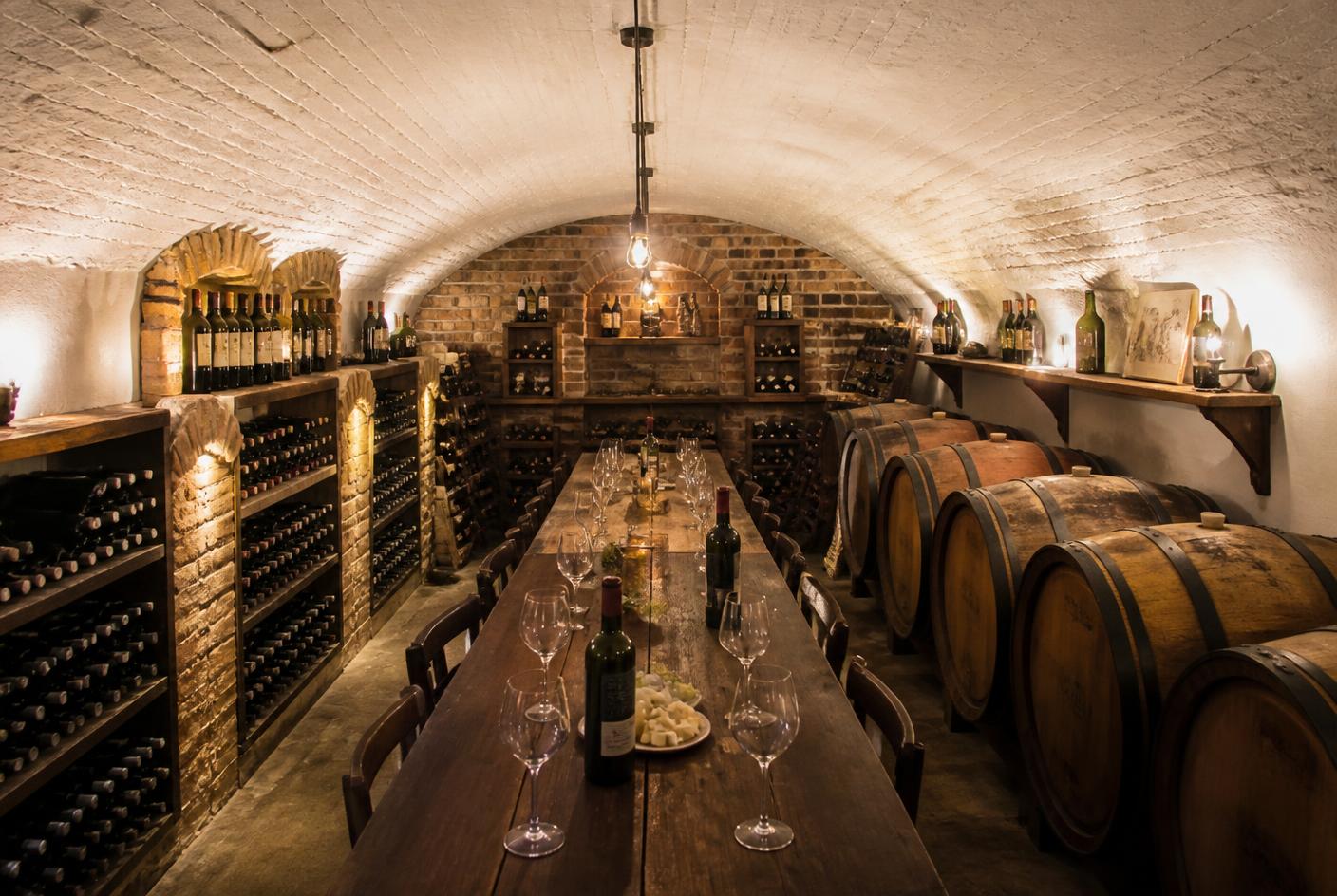
A vinný sklep is rarely a polished tasting room. Expect a narrow, cool, barrel-lined space under someone's house, a long shared table, and the winemaker pouring from the barrel and talking you through it. Many of the best ones require a call or a message ahead rather than a walk-in — especially outside July and August, when the family is working the vines rather than waiting for visitors. Your pension can make the call in Czech if that's easier.
Tastings are informal and, by Western European standards, very cheap — a flight of six or eight wines with bread and cheese often costs less than two glasses in a Prague wine bar. Buying a bottle or two afterward is the polite norm, not an obligation, and nobody will push you. Don't overthink the formality: the winemakers much prefer questions about what's in the glass to any ritual.
Chapter 07
Best Places to Stay Overnight
Mikulov is the most convenient base, with the widest range of guesthouses (penziony) and small hotels, many with vineyard views and all within stumbling distance of the cellars. For something quieter, the smaller wine villages — Pavlov under the Pálava cliffs, or Valtice itself — put you closer to specific producers and give you the rural version of the region, mist over the vines at breakfast and no day-trippers. Wherever you book, choose a rate with breakfast included: many wine villages have very limited restaurant options outside the main square, and mornings are not when anything opens early.
Chapter 08
Food Pairings & Local Specialties
Cellar food in Moravia is simple and deliberately salty — it exists to complement the wine, not compete with it. Expect cured meats, hard sheep or cow's cheese, pickled vegetables, utopenci (pickled sausages), and dark bread with lard and onion. Tvarůžky, the pungent Olomouc cheese, turns up too if you're brave. It's a noticeably different food culture from Bohemia's heavy pub plates of pork, dumplings and cabbage: lighter, sharper, made for grazing across an evening rather than one filling meal. That contrast — wine-first versus beer-first — is the clearest way to feel how different the two halves of this country really are.
Chapter 09
Moravian Wine FAQ
Is South Moravia worth visiting from Prague?+
Yes — especially for wine lovers or anyone on a second Czech trip. It's a genuinely different landscape and pace from Bohemia: vineyards and cellar bars instead of castles and beer halls.
How far is Mikulov from Prague?+
About 3 hours by train via Břeclav, or roughly 2.5–3 hours by car.
Do I need to speak Czech to visit wine cellars?+
No. Most cellars in Mikulov and Valtice are used to international visitors, though smaller family cellars may have limited English — a few words and some pointing go a long way.
When is the best time to visit for wine tasting?+
September, for the harvest (vinobraní) atmosphere and festivals, or May–June for mild weather with fewer crowds.
Chapter 10
Keep Reading
Planning the trip itself? These two guides cover the towns at the heart of this region in full — where to stay, what to book, and how to time it.