
The things I tell every friend before their first trip — visas, koruny, trams, tipping, and the small details that make Czechia easier to travel.
Chapter 01
Do You Need a Visa?
Czechia is part of the Schengen Area, so if you're coming from the US, UK, Canada, Australia, or most of the EU, you don't need a visa for stays up to 90 days within any 180-day period. Your passport should be valid for at least three months beyond your planned departure date.
If you're already traveling in another Schengen country, crossing into Czechia is as simple as crossing a state line — no border checks, no stamps. Citizens of some countries do need a Schengen visa in advance; check the official requirements for your nationality well before booking flights, since processing can take a few weeks.
Chapter 02
Currency & Money
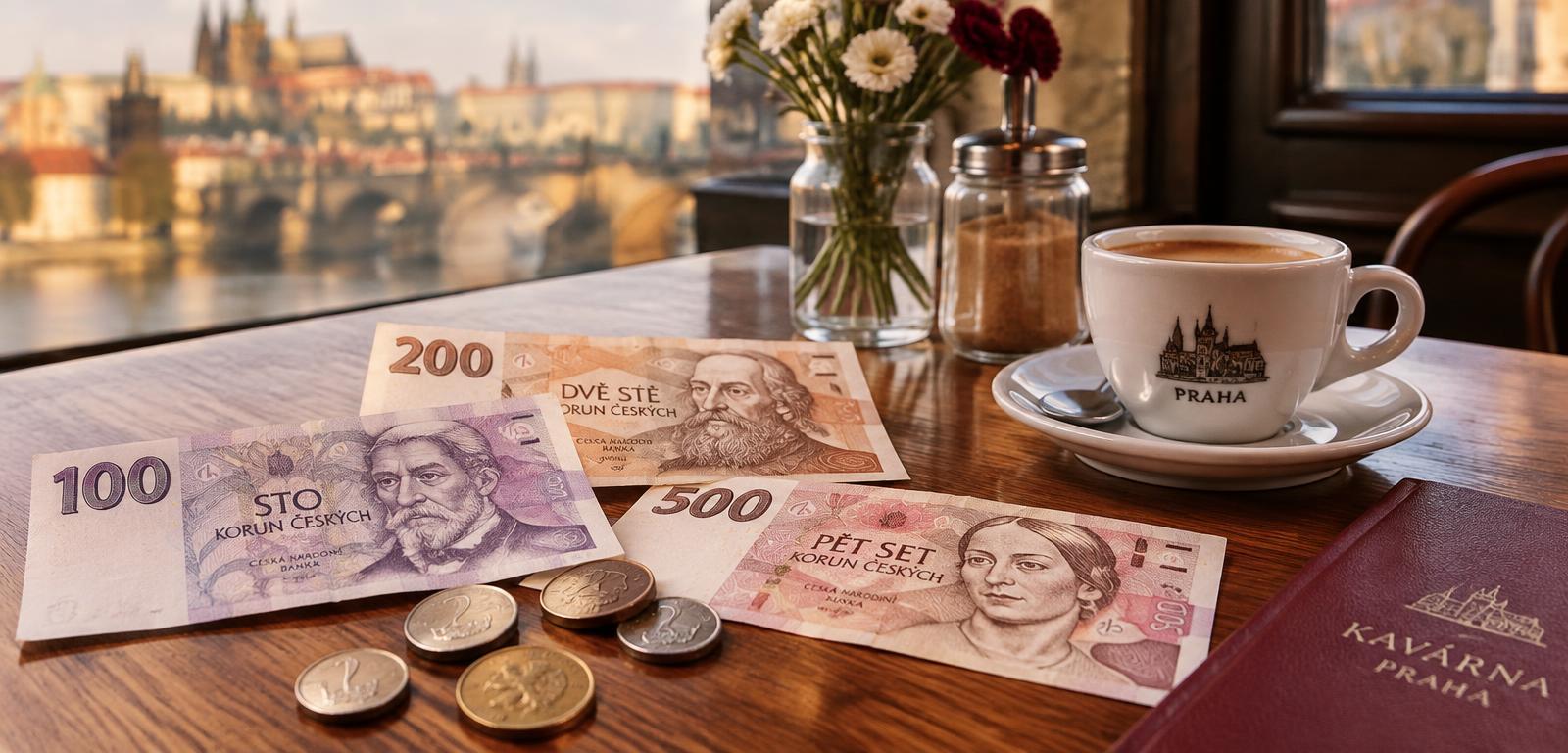
Czechia uses the Czech koruna (CZK), not the euro — this catches a lot of first-timers off guard. Cards are widely accepted in Prague and other tourist towns, but smaller pensions, market stalls, and rural restaurants often still prefer cash.
Withdraw money from a bank-branded ATM (like Česká spořitelna or ČSOB) rather than the standalone "Euronet" machines you'll see everywhere in tourist areas — they charge poor exchange rates and often push a "dynamic currency conversion" option that quietly costs you 5-10% more. Always choose to be charged in CZK, never in your home currency, when given the option.
Tipping is appreciated but not obligatory — rounding up or adding 10% for good service in restaurants is standard.
Chapter 03
Getting Around
Czech public transport is excellent, punctual, and cheap. Prague's trams, metro, and buses run on a single ticket system — buy tickets from machines at stops or via the PID Lítačka app before boarding, since there are no ticket barriers and inspectors do fine people who board without one.
For travel between cities, download the IDOS app (or use idos.cz) — it's the definitive Czech train and bus timetable, more reliable than Google Maps for regional routes. RegioJet and FlixBus cover most intercity bus routes at low prices, while Czech Railways (ČD) run comfortable, frequent trains. In cities, Bolt is more widely used than Uber and usually cheaper.

Chapter 04
Staying Connected
If you're arriving from outside the EU, your phone plan likely won't work here without roaming charges — and even EU visitors sometimes have data caps for travel abroad. The simplest fix is an eSIM: you can activate it before you land, skip the hunt for a physical SIM card at the airport, and get working data the moment you land. It's especially useful if you're navigating trains between towns or relying on maps in areas with patchy English signage.

Need Data on Arrival?
Get an eSIM Before You Land
Skip the airport SIM card kiosk. Activate an eSIM before your trip and have working data the moment you land in Prague.
Chapter 05
Safety
Czechia is one of the safer countries in Europe — violent crime against tourists is rare. The real risks are petty and avoidable: pickpocketing in crowded tourist spots like Charles Bridge, Old Town Square, and public trams, plus a handful of well-known scams.
Watch out for unmetered taxis waiting outside tourist attractions (always use Bolt or a marked taxi stand), currency exchange booths advertising suspiciously good rates (walk past them — legitimate exchanges don't need to shout), and bars near Wenceslas Square that add unlisted charges to a bill after a "free" shot. None of this should worry you — just keep normal city awareness, the same as you would anywhere.

Chapter 06
Czech Etiquette
Czechs are direct but not unfriendly — don't mistake a lack of small talk for rudeness. A simple "dobrý den" (good day) when entering a small shop or restaurant goes a long way and is genuinely expected, unlike in many other countries.
Tipping 10% is standard in restaurants when the service was good; it's not mandatory, but leaving nothing is noticed. Czechs take beer seriously — ordering a "large beer" typically means 0.5L, not a small glass — and it's normal to sit down at a shared table in a busy pub if seats are limited. The Czech Beer Guide explains the ordering and pub etiquette in more detail. Removing shoes when entering someone's home is expected, even for a short visit.

Chapter 07
Best Time to Visit
Spring (April–May) and early autumn (September–October) offer the best balance of good weather and manageable crowds. Summer (June–August) is warm and lively but brings the heaviest tourist crowds, especially in Prague's Old Town.
Winter, particularly December, transforms Prague into a genuinely magical Christmas market season, though days are short and cold. Avoid Easter week and major Czech public holidays if you want to dodge domestic tourist crowds on top of international ones. A full month-by-month breakdown is coming soon as its own guide.

Chapter 08
Essential Apps to Download Before You Arrive
IDOS (train and bus timetables), PID Lítačka (Prague public transport tickets), Bolt (rideshare), Google Maps (works well for walking and driving; less reliable for train/bus routes — use IDOS instead), and Google Translate with the Czech language pack downloaded for offline use, especially useful for reading menus in smaller towns.