Czech cuisine is heartier and more nuanced than most travelers expect. Here's what to try, what to skip and where to find the real thing.
Chapter 01
A Very Short History of Czech Food
Czech cuisine developed as hearty, cold-climate farming food — built around pork, potatoes, cabbage and dumplings, designed to fuel physical labor through long winters. Austro-Hungarian influence added dishes like schnitzel and strudel, while the 40 years of communism standardized many recipes into the "hospoda" (pub) staples I still eat today. What survives now is comfort food in the truest sense: rich, starchy, and meant to be shared over a beer.
Chapter 02
The Dishes You Must Try
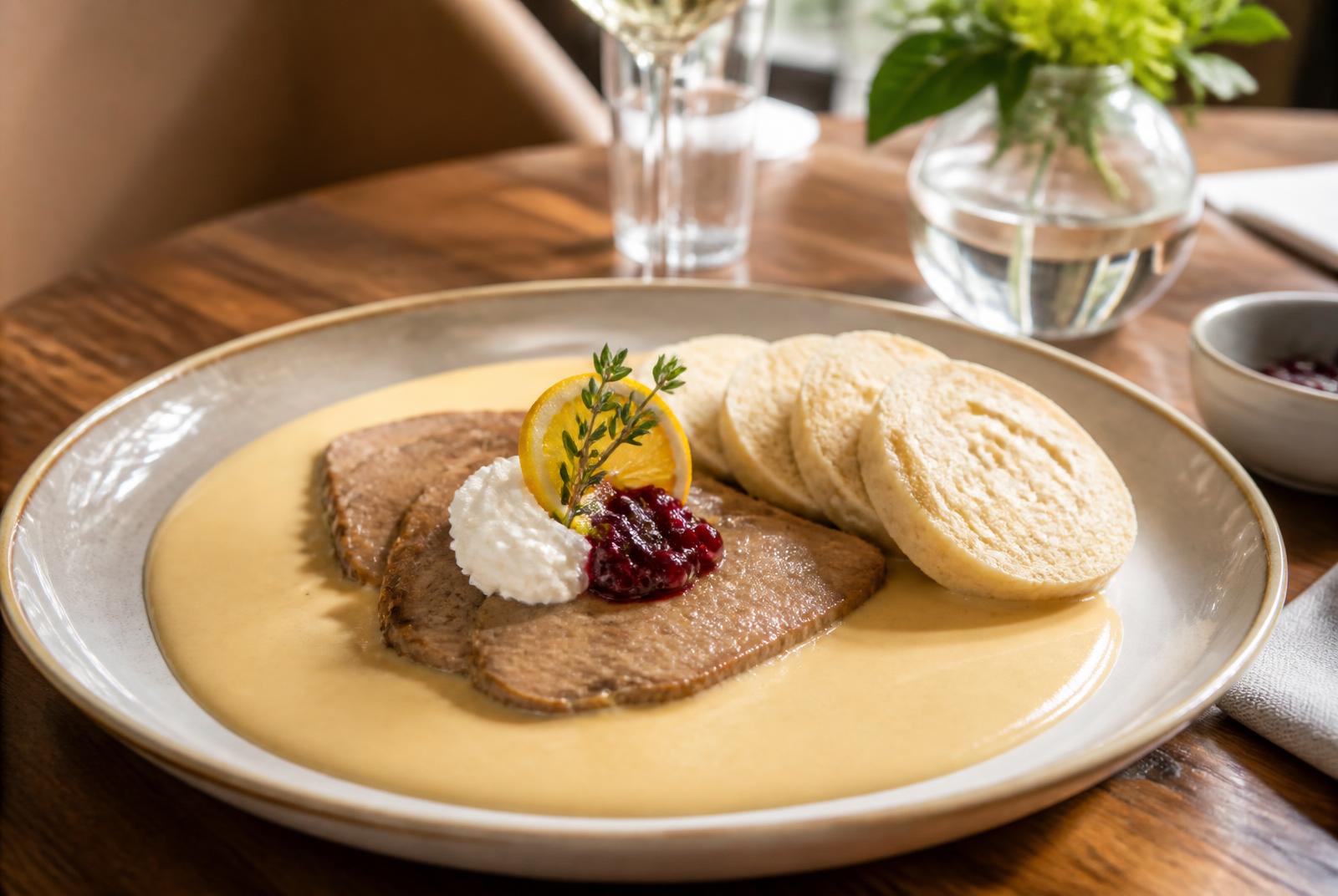
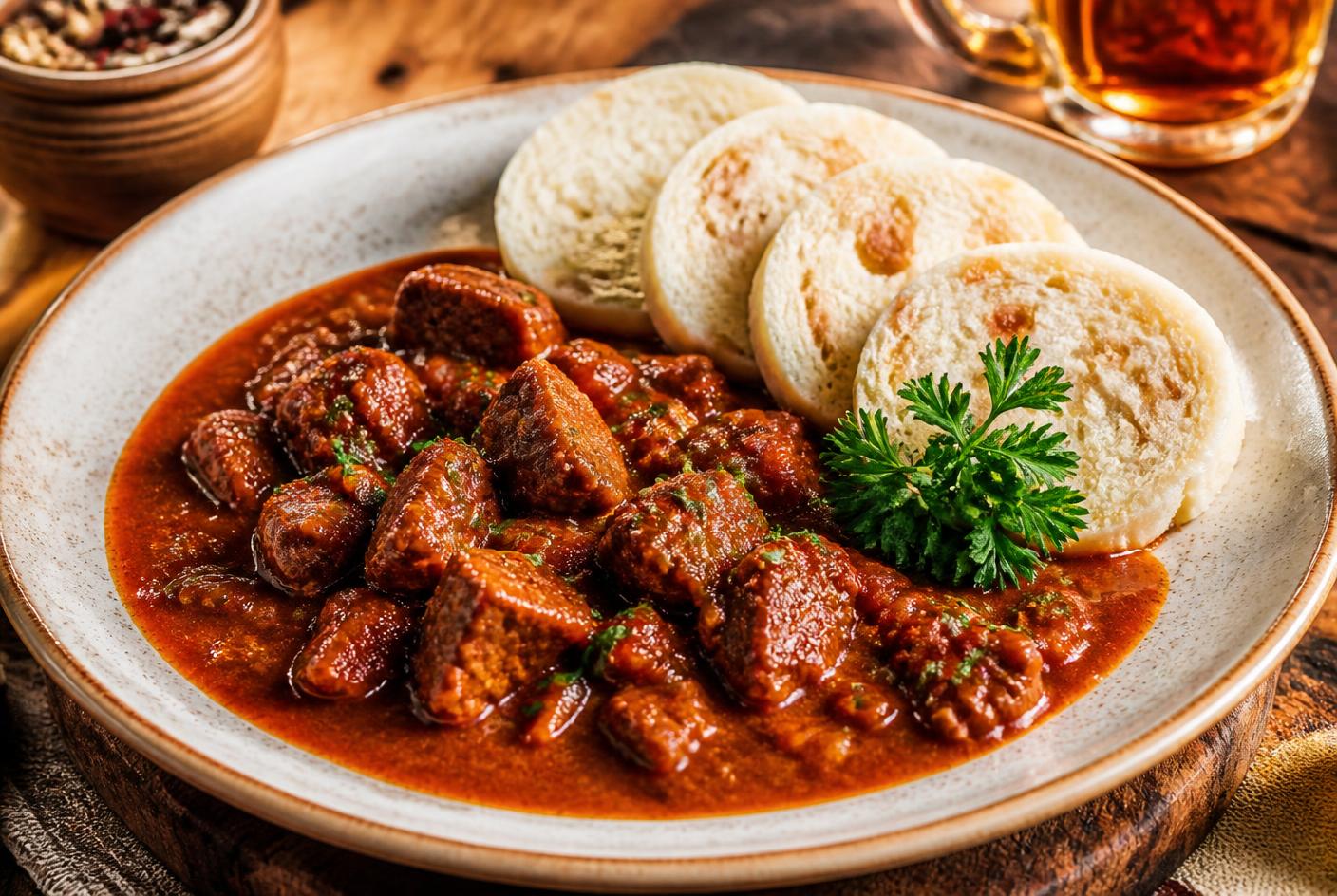
Svíčková — marinated beef sirloin in a creamy vegetable sauce, served with bread dumplings and a dollop of cranberry compote — is the national dish and the one I tell first-time visitors to order first. Vepřo-knedlo-zelo (roast pork, dumplings, sautéed cabbage) is the true everyday classic. Guláš here is thicker and more paprika-forward than its Hungarian namesake, usually served with dumplings instead of rice. For something lighter, try smažený sýr — fried cheese, usually Edam or Hermelín, breaded and deep-fried, served with tartar sauce and fries. It sounds indulgent because it is.
Chapter 03
Street Food & the Truth About Trdelník
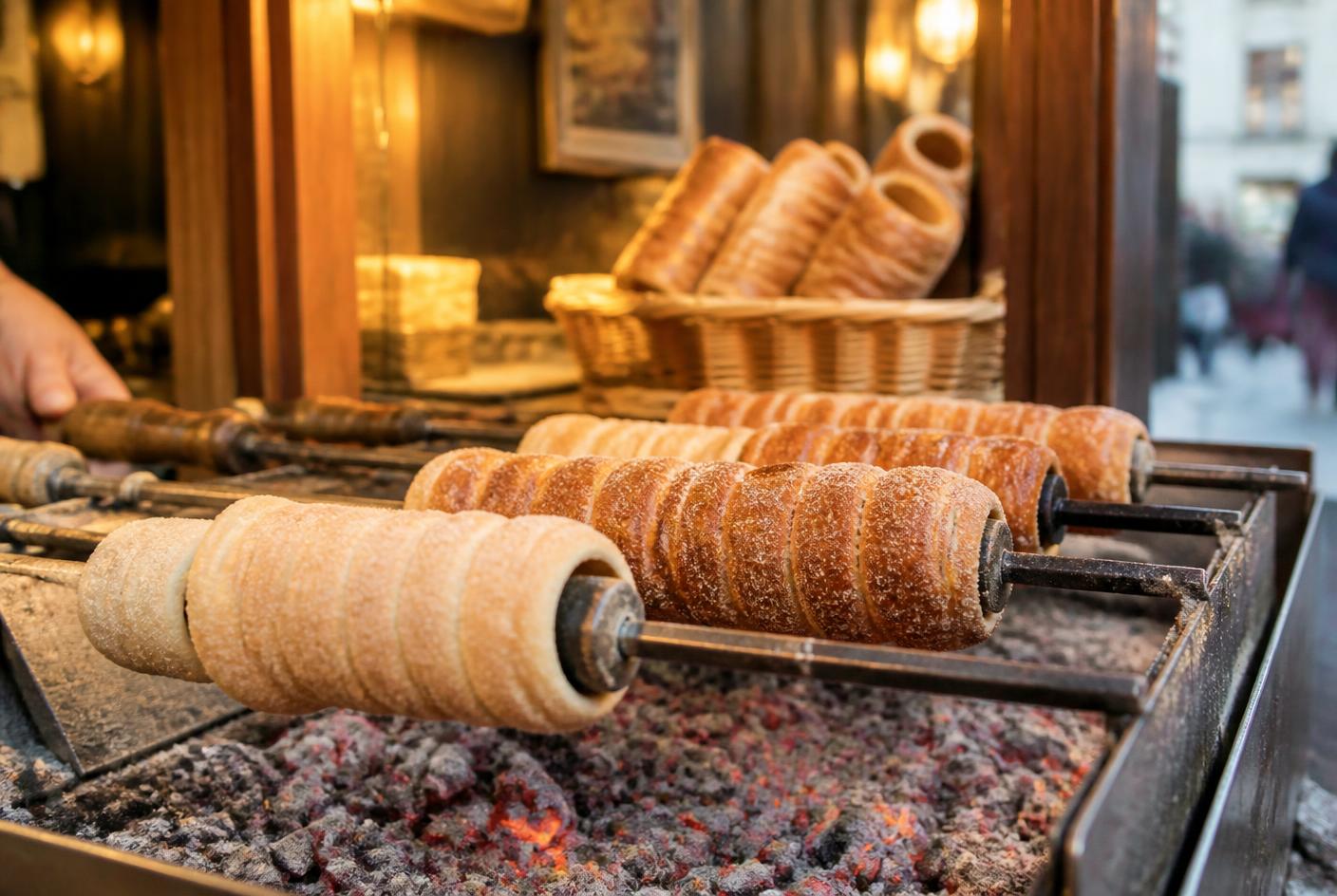
Trdelník — the cinnamon-sugar pastry cone you'll see at every stall in the Old Town — is not actually a traditional Czech food. It originated in Slovakia and Hungary and became a Prague tourist phenomenon only in the last decade or so; you won't find me or my friends eating it regularly. For genuine Czech street food, look instead for klobása (grilled sausage) from a stánek (street stall), or bramborák — a crispy, garlicky potato pancake, best eaten hot and slightly greasy from a market stand.
Chapter 04
Czech Beer — a Working Introduction
Czechia has the highest beer consumption per capita in the world, and pivo (beer) here is treated with a seriousness that borders on ritual. Pilsner-style lager was invented in Plzeň in 1842 and remains the dominant style — look for Pilsner Urquell, Budweiser Budvar (the original Budweiser, unrelated to the American beer), or regional favorites like Kozel. Ordering "a beer" typically gets you a 0.5L glass; if you want less, ask for malé pivo (small beer, 0.3L). "Twelve degree" (dvanáctka) beers are stronger, "ten degree" (desítka) are lighter session beers — the number refers to the original wort gravity, not alcohol content directly, but it correlates.

Chapter 05
Moravian Wine, Slivovice & Becherovka
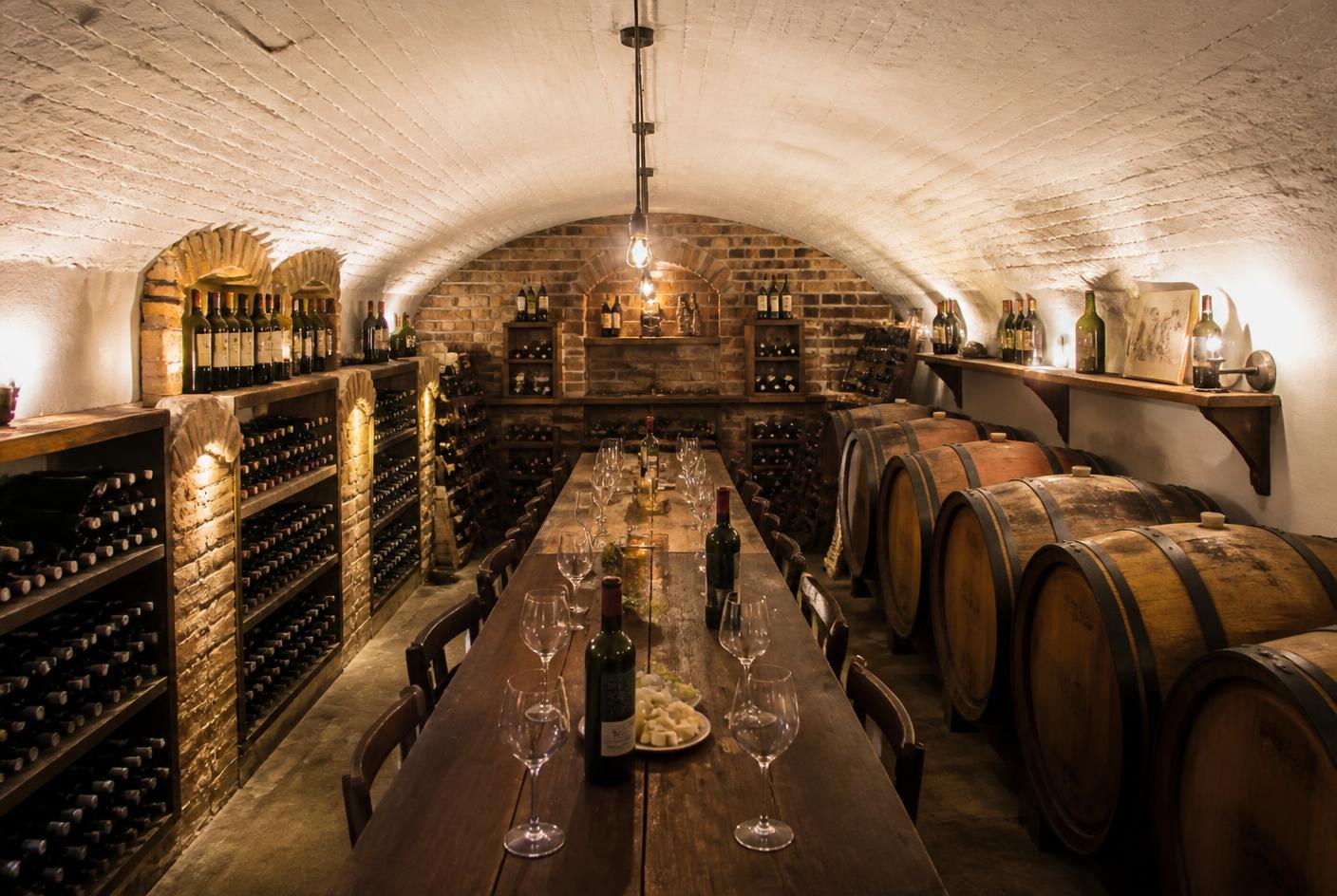
South Moravia has been producing wine for over a thousand years, mostly white and lighter reds that rarely get exported — Moravian wine bars (vinárna) in Prague are the easiest way to try them without traveling south. Slivovice is a potent plum brandy, often homemade, and drinking it is treated as a small ritual — offered as a welcome or a toast, not something to sip slowly. Becherovka, a herbal liqueur from Karlovy Vary, is milder and often drunk as a digestif or mixed into a "Beton" (Becherovka and tonic) — practically the unofficial Czech national cocktail.
Chapter 06
Where to Eat: Hospoda vs. Restaurace
A hospoda (pub) is where most Czechs actually eat — simple, affordable, unpretentious, with beer as central as the food. A restaurace (restaurant) implies a step up in formality and price, though the line blurs constantly. As a rule, if a menu is only in English or displayed with glossy photos right at the entrance in a heavily touristed area, expect inflated prices and blander food — I rarely eat there. A hospoda with a handwritten daily menu (denní menu) taped to the door, especially at lunchtime, is almost always a safer bet.
Chapter 07
Prague Restaurants Worth the Detour
For a proper svíčková without the tourist markup, I always send people a few blocks outside the main squares rather than directly on them — the quality is usually better and the price noticeably lower. Vinohrady and Žižkov neighborhoods have a strong concentration of good, mid-priced local restaurants favored by residents rather than tour groups. If you want a genuinely special meal, Prague also has a growing fine-dining scene reinterpreting Czech classics with modern technique — worth it for one splurge night if that interests you.

Eat Like a Local, Guided
Prague Food & Tasting Tours
Small-group evening food tours have limited tables and popular dates fill first — reserve early if you only have one free night.
Chapter 08
Vegetarian & Dietary Notes
Traditional Czech food is meat-heavy, but Prague's food scene has grown considerably more vegetarian and vegan-friendly in the past decade, especially in central and Vinohrady neighborhoods. Smažený sýr (fried cheese) and bramborák (potato pancake) are both naturally vegetarian classics available almost everywhere. Gluten-free travelers should be cautious with dumplings (knedlíky), which are usually flour or bread-based, but rice is often offered as a substitute if you ask.
Chapter 09
Czech Food FAQ
Is Czech food spicy?+
No — it's hearty and savory, rarely spicy. Paprika appears in guláš but for color and depth, not heat.
Can I eat well as a vegetarian in Prague?+
Yes, especially in central neighborhoods and Vinohrady — smažený sýr and bramborák are naturally vegetarian, and modern restaurants increasingly offer full vegetarian menus.
What's the difference between a hospoda and a restaurace?+
A hospoda is a casual pub — the food is simpler, cheaper, and closer to how locals actually eat. A restaurace is more formal and pricier.
Is tap water safe to drink?+
Yes, tap water in Czechia is safe and commonly drunk — though when ordering water at a restaurant, ask for “voda z kohoutku” if you specifically want tap rather than bottled.