Moravia
Things to Do in Brno
Czechia's second city has castles, catacombs and a student energy Prague lost years ago — here's why it's worth the trip.
Brno gets skipped by almost every first-time visitor, and that's exactly its appeal. It's Czechia's second-largest city, a functionalist architecture capital, home to the country's second-largest ossuary, and — thanks to a huge student population — has a nightlife and café scene that feels genuinely lived-in rather than built for tourists.
01
Chapter One
Špilberk Castle

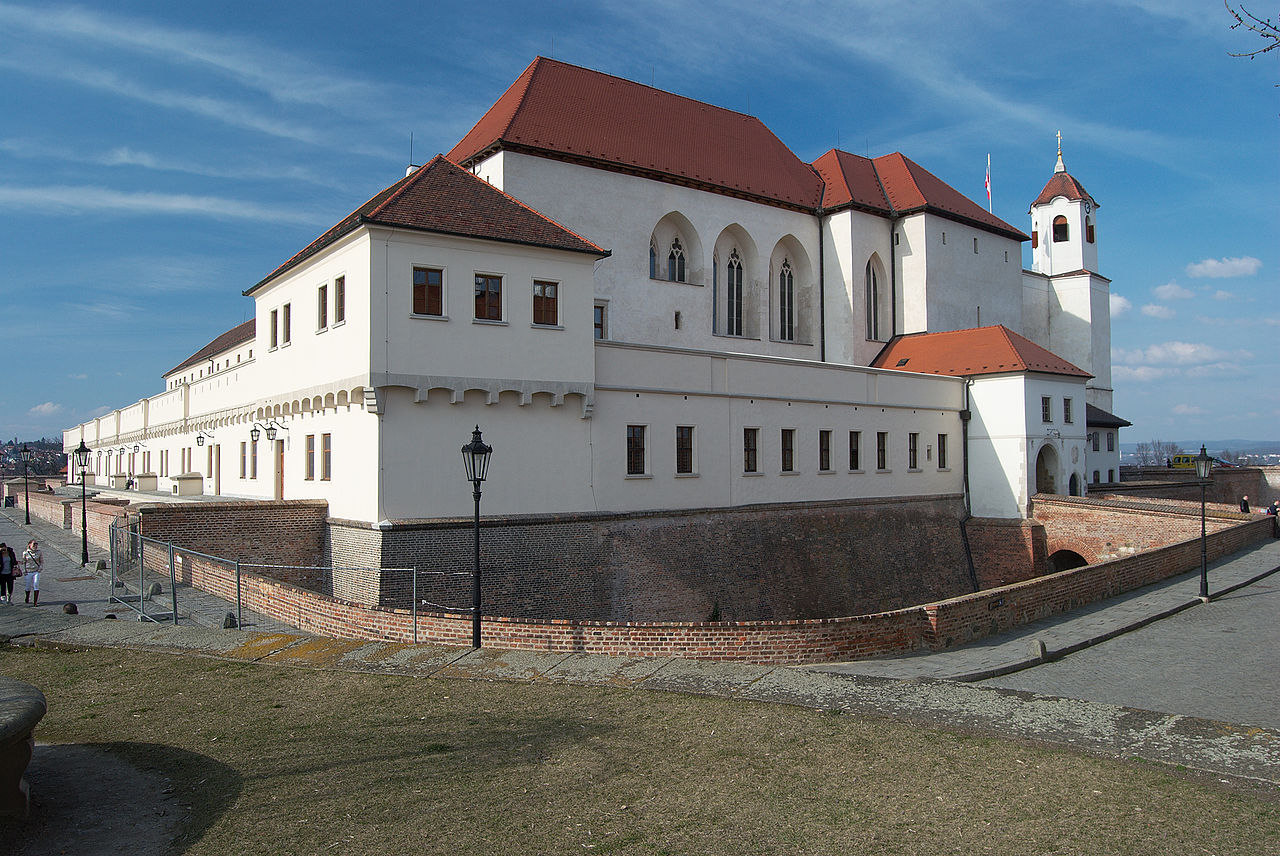
Why visit: Špilberk is the fortress that has loomed over Brno since the 13th century. It began as a royal castle, became a formidable Habsburg stronghold and was later turned into one of the empire's most notorious prisons. Today it houses the Brno City Museum, but the ramparts and the broad view across the city's red roofs are reason enough to walk up.
The casemates — the underground prison cells built into the fortifications — are the most atmospheric part of the visit. Their cold corridors make the castle's prison years feel much more immediate than a room of display cases ever could. If time is tight, prioritize the casemates and the tower rather than trying to read every museum panel.
Plan ahead
Skip the Line at Špilberk Castle
Book tickets to the casemates and tower online to avoid the ticket-office queue in summer.
02
Chapter Two
The Ossuary Under St. James's Church

Workers discovered the ossuary accidentally in 2001 during restoration around St. James's Church. Beneath the square were chambers holding the remains of an estimated 50,000 people, moved here from overcrowded medieval cemeteries after generations of plague, cholera and war. That makes it the second-largest ossuary in Europe after the Paris Catacombs.
It is quiet, low-lit and genuinely affecting rather than theatrical. Far fewer visitors come here than to Kutná Hora's Sedlec Ossuary, despite its comparable historical importance. That is one of the strongest arguments for prioritizing Brno instead of automatically doing “just Prague and Kutná Hora”: the history is every bit as substantial, but you can still experience it without moving through a tour-group queue.
03
Chapter Three
Functionalist Architecture & Villa Tugendhat

Brno is the unofficial capital of Czech functionalist architecture. The city grew rapidly between the wars, and a confident generation of architects filled it with clean-lined villas, cafés and public buildings that still feel remarkably modern. You will spot the style across residential neighborhoods, but Villa Tugendhat is the star attraction.
Designed by Ludwig Mies van der Rohe and completed in 1930, the UNESCO-listed villa helped define modern domestic architecture: open space, huge glass walls and an onyx partition that changes color in afternoon light. Tours are capacity-limited and commonly sell out weeks ahead in summer. Book as soon as your dates are fixed; turning up on the day is not a serious plan.
04
Chapter Four
Freedom Square & the Astronomical Clock

Náměstí Svobody — Freedom Square — is Brno's social center, a broad pedestrian space where trams skim one edge and café tables fill the rest. Its mix of ornate historic façades and unapologetically modern additions tells you more about Brno than a perfectly preserved square would: this is a working city that keeps adding layers rather than freezing itself for visitors.
The strangest layer is Brno's astronomical clock, a black granite obelisk whose shape inspires predictable local jokes. Every day at 11 a.m. — Brno's traditional “noon,” tied to the story of the 1645 Swedish siege — it releases a glass marble through one of four openings. A small crowd gathers to catch it, and collecting one has become a minor local tradition. Arrive early if you want a chance; regulars know exactly where to place their hands.
05
Chapter Five
Where to Eat & Drink Like a Local

Masaryk University and Brno's other colleges give the city an enormous student population. The useful result for travelers is better, cheaper food and a livelier café-and-bar scene than a city this size would normally sustain. The center has serious specialty coffee, small chef-run bistros and busy bars that still price for people who live here rather than weekend visitors.
The vegetarian and vegan scene is notably stronger than in Prague, especially around the center and Veveří. Brno is also the gateway to South Moravia, so wine matters here in a way it does not in Bohemian pub culture. You will still find excellent Czech lager, but wine bars pouring local Pálava, Riesling and Veltlín are part of ordinary evenings, not a special tourist tasting.
06
Chapter Six
Is Brno Worth a Day Trip or an Overnight?

From Prague, Brno is about 2.5 hours by direct train. You can go there and back in one day, but five hours of travel leaves a rushed visit built around train times. It is too far for a comfortable day trip, especially if Villa Tugendhat is on your list or you want to understand why locals praise the city's evening energy.
Brno works much better as a one- or two-night stop between Prague and Vienna. It is also the practical base for exploring South Moravia: Mikulov, Lednice-Valtice and the wine villages are all easier from here than from Prague. If that sounds like your trip, continue with the Moravian Wine Region guide. My honest minimum is one overnight; arrive before lunch, stay for dinner and leave the following afternoon.
Plan ahead
Planning a stop in Brno?
Villa Tugendhat and other limited-capacity sights can sell out weeks ahead in summer — reserve before fixing your travel dates.
Frequently Asked Questions
Planning your Brno visit.
Is Brno worth visiting?+
Yes, especially for a second Czech trip or as a stop between Prague and Vienna; it has major sights without Prague-level crowds.
How do I get from Prague to Brno?+
Direct trains (RegioJet, ČD) run frequently, taking about 2.5-3 hours; buses are a cheaper, slightly slower alternative.
Is one day enough for Brno?+
Enough to cover Špilberk and the ossuary, but an overnight lets you add Villa Tugendhat and the food/bar scene properly.
Is Brno safe?+
Yes, on par with the rest of the Czech Republic — very safe by European standards.
The Wonders Dispatch
Get Czechia travel tips, itineraries and hidden gems delivered by a local.
One quiet letter a month from Lukáš in Prague. No spam, no sponsored fluff — just the notes I'd send a friend planning their trip.
Free · Unsubscribe any time · Read by travelers in 40+ countries